A study published in Nature Astronomy reveals one of the most primitive stars ever observed
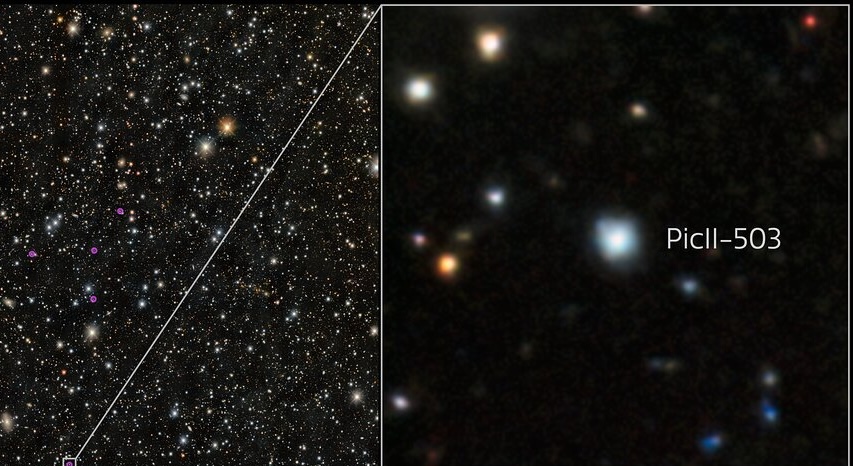
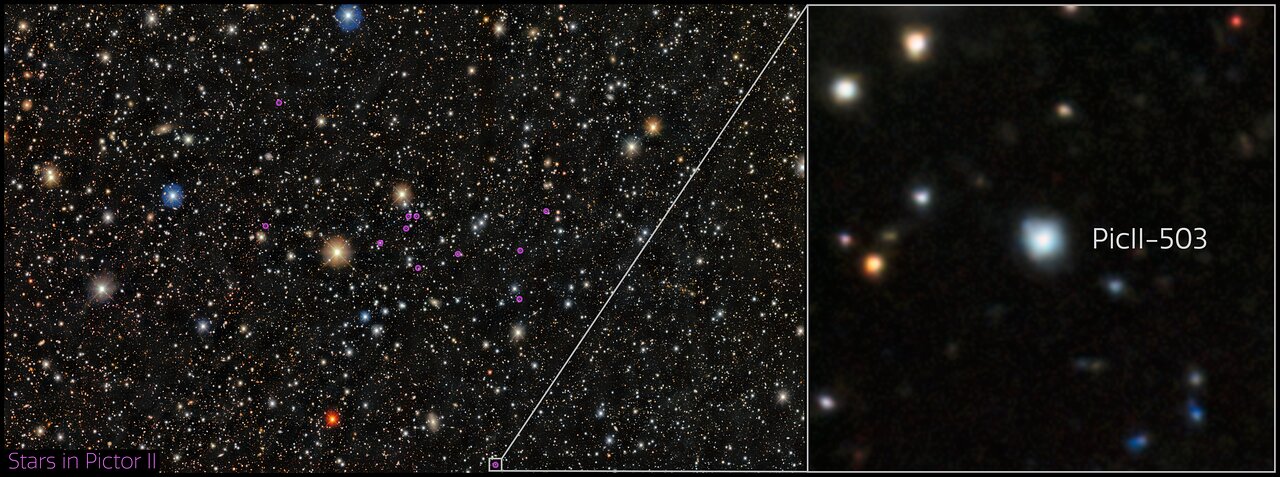
A new study published in Nature Astronomy, with the participation of Clécio R. De Bom, identified one of the clearest pieces of evidence of this process to date: the star PicII-503, located in the ultrafaint dwarf galaxy Pictor II.
 View on Instagram
The study of the first stars in the Universe is one of the most direct ways to understand how the chemical elements we know today were formed. In a new paper published in Nature Astronomy, an international consortium of researchers, with the participation of the Centro Brasileiro de Pesquisas Físicas, identified one of the clearest pieces of evidence of this process to date: the star PicII-503, located in the ultrafaint dwarf galaxy Pictor II.
A chemical signature of the primordial Universe
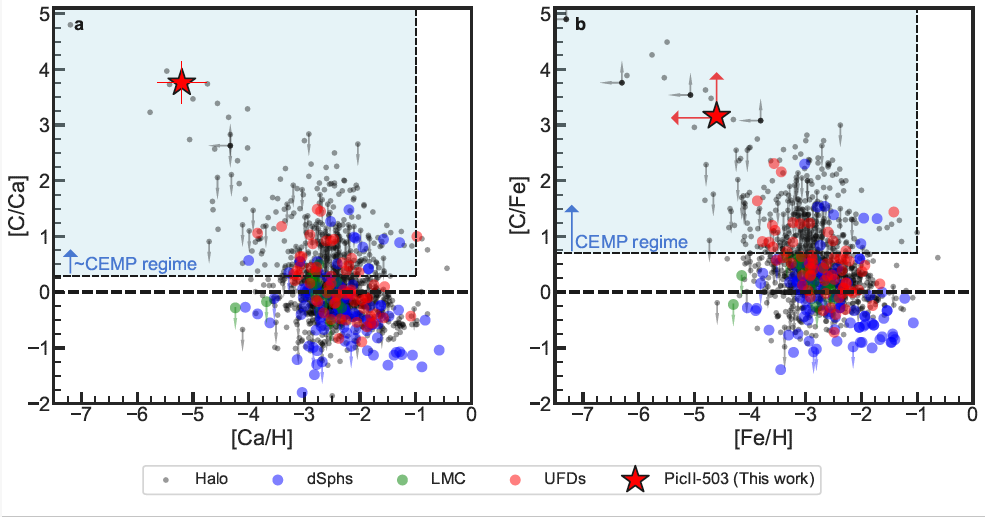
The star PicII-503 exhibits an अत्यamente unusual chemical composition. Observations indicate very low levels of iron and calcium, combined with a high abundance of carbon. This pattern is characteristic of objects formed from material enriched by first-generation supernovae—that is, explosions of the earliest stars in the Universe.
This type of chemical signature acts as a “fingerprint” of the physical conditions of the primordial cosmos. Analyzing these elements makes it possible to reconstruct scenarios of star formation from epochs far earlier than those that can be directly observed.
The results reinforce the hypothesis that metal-poor, carbon-rich stars may have originated from low-energy supernovae, which selectively ejected chemical material, influencing the composition of subsequent generations of stars.
Dwarf galaxies as cosmic fossils
The discovery also highlights the role of ultrafaint dwarf galaxies as important archives of the early Universe. Due to their limited chemical and dynamical evolution, these systems preserve records of processes that took place during the earliest phases of galaxy formation.
The galaxy Pictor II emerges as a particularly valuable environment for studying primordial nucleosynthesis and the chemical evolution of the Universe. The presence of a star like PicII-503 suggests that such systems may hold key clues about the transition between the first stars (Population III) and subsequent generations.
The role of the DELVE project and scientific infrastructure
The participation of the Centro Brasileiro de Pesquisas Físicas in this study is part of the DELVE (DECam Local Volume Exploration Survey) project, which uses photometric data obtained with the Dark Energy Camera (DECam) to investigate satellite galaxies and stellar structures in the local Universe.
Data from the DELVE DR2 catalog were essential for the identification and analysis of the object, highlighting the importance of large astronomical surveys combined with advanced computational infrastructure and international collaboration.
According to Clécio De Bom, a researcher at CBPF and co-author of the study, results like this help address one of the central questions in astrophysics: how the first stars produced the chemical elements that make up the observable Universe today.
Connecting the local Universe to the cosmic past
The identification of extremely primitive objects in the local Universe makes it possible to establish a bridge between contemporary observations and the physical conditions of the first billions of years after the Big Bang.
This type of approach is essential for advancing our understanding of processes such as the formation of the first stars and galaxies, the chemical enrichment of the interstellar medium, and the evolution of baryonic matter in the cosmos.
By combining high-quality observational data with theoretical models and computational analysis, studies like this significantly expand our ability to investigate the origin of visible matter.
Explore all the technical details of this discovery and better understand how it contributes to modern cosmology in the full study published in Nature Astronomy.