Vera C. Rubin Observatory Begins LSST Operations, Launching the Largest Astronomical Survey in History
After more than two decades of planning, technological development, and collaboration among thousands of scientists and engineers from around the world, the Vera C. Rubin Observatory has officially begun the Legacy Survey of Space and Time (LSST), one of the largest scientific projects ever undertaken in astronomy.
 View on Instagram
After more than two decades of planning, technological development, and collaboration among thousands of scientists and engineers from around the world, the Vera C. Rubin Observatory has officially begun the Legacy Survey of Space and Time (LSST), one of the largest scientific projects ever undertaken in astronomy.
Located on Cerro Pachón in Chile, at an altitude of 2,682 meters (8,799 feet), the Vera C. Rubin Observatory brings together some of the most advanced technologies ever developed for astronomical observation. The site was selected for its exceptional observing conditions, including dark skies, a dry atmosphere, and low atmospheric turbulence, making it one of the world's premier locations for exploring the Universe.
Over the next ten years, the LSST will conduct a continuous survey of the southern sky. Each night, the largest digital camera ever built for astronomy will capture thousands of high-resolution images, repeatedly scanning the same regions of the sky to track how stars, galaxies, asteroids, and other celestial objects evolve over time.
The Largest Digital Camera Ever Built for Astronomy
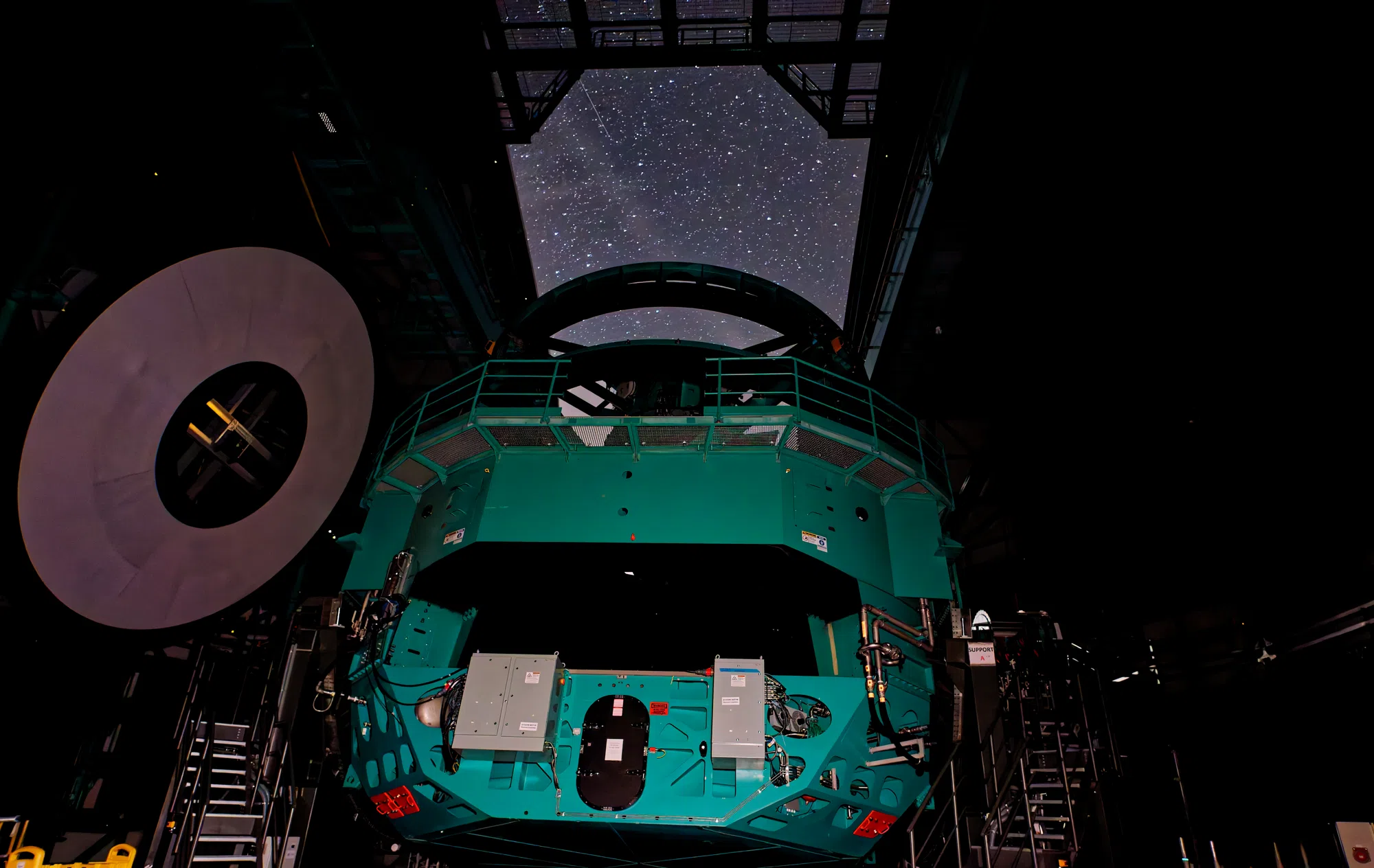
The Vera C. Rubin Observatory is equipped with a telescope featuring an 8.4-meter primary mirror and a wide-field optical system paired with a digital camera weighing approximately three metric tons.
With 3.2 billion pixels and a front lens measuring about 1.57 meters in diameter, the camera will capture extraordinarily detailed images of the southern sky. During each observing night, it will acquire new images approximately every 40 seconds, creating a continuous record of how the Universe changes over time.
By the end of its ten-year mission, the LSST will have produced one of the largest scientific datasets ever collected in the history of astronomy.
A New Dynamic View of the Universe
Unlike traditional astronomical surveys that capture isolated snapshots of the sky, the LSST will repeatedly observe the same regions of the southern sky over the course of a decade.
This continuous monitoring will make it possible to detect and study time-varying phenomena such as supernova explosions, variable stars, asteroids, comets, interstellar objects, and other transient events.
The survey will also provide unprecedented data for research on the structure of the Milky Way, the census of small bodies in the Solar System, the formation and evolution of galaxies, and fundamental questions involving dark matter and dark energy.
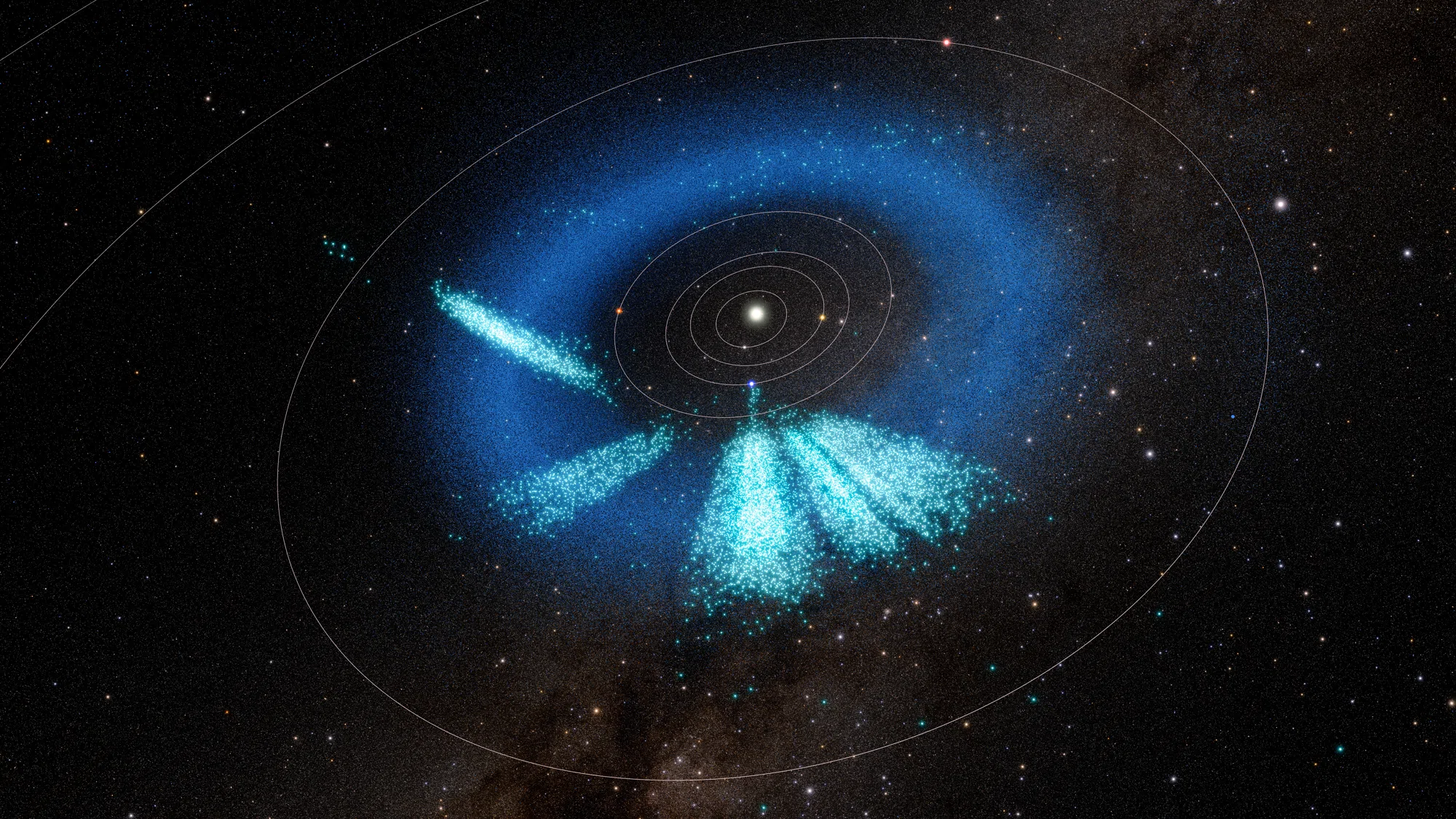
Even during the observatory's commissioning phase, when its systems were being tested and calibrated, researchers identified thousands of previously unknown asteroids along with numerous other objects within the Solar System, demonstrating the survey's remarkable discovery potential from the very beginning.
Data Science on an Unprecedented Scale
The start of LSST operations also marks an unprecedented challenge for data science.
Each night, the observatory will generate approximately 20 terabytes of scientific data, recording billions of astronomical sources and identifying millions of variable and transient phenomena.
Within minutes of each observation, automated systems will issue millions of astronomical alerts to the global scientific community, enabling observatories around the world to rapidly follow up on events of scientific interest.
Over the course of the survey, the project will accumulate petabytes of data, creating a catalog containing billions of celestial objects and trillions of measurements. These datasets will be released periodically to the scientific community, significantly expanding research opportunities across a wide range of fields in astronomy.
An International Scientific Collaboration
The LSST brings together researchers, universities, and research institutions from around the world in a broad international scientific collaboration. Researchers from the Artificial Intelligence for Physics Laboratory (Lab-IA/CBPF) are part of the LSST scientific collaboration through the Brazilian Participation Group (BPG), with support from the Interinstitutional Laboratory for e-Astronomy (LineA), developing artificial intelligence methodologies for the analysis of large-scale astronomical surveys.
Beyond the construction and operation of the observatory, the project involves experts in astronomy, physics, data science, high-performance computing, and artificial intelligence working together to develop tools capable of processing and analyzing one of the largest scientific datasets ever produced.
With the official start of operations at the Vera C. Rubin Observatory, the scientific community now has access to a new stream of observations that will advance research on the evolution of the Universe, galaxy formation, Solar System objects, and a wide range of other astrophysical phenomena over the coming decade.
Learn more about the Vera C. Rubin Observatory and the Brazilian Participation Group.