UFABC Student Develops Artificial Intelligence Project for Exoplanet Detection During Internship at Lab-IA/CBPF
During a six-week research internship at the Lab-IA/CBPF, Physics undergraduate student Gabriela Reisch, from UFABC, developed a project that uses artificial intelligence to assist in the identification of exoplanets. The research applied neural networks to the analysis of data from NASA’s TESS telescope, demonstrating how machine learning techniques can accelerate the discovery of new worlds and contribute to addressing key challenges in modern astronomy.
 View on Instagram
For six weeks, Physics undergraduate student Gabriela Reisch, from the Federal University of ABC (UFABC), carried out a research internship at the Laboratory of Artificial Intelligence for Physics (Lab-IA) at the Brazilian Center for Research in Physics (CBPF). The internship was conducted through the Aristides Pacheco Leão Program, with support from FAPESP and the Brazilian Academy of Sciences (ABC).
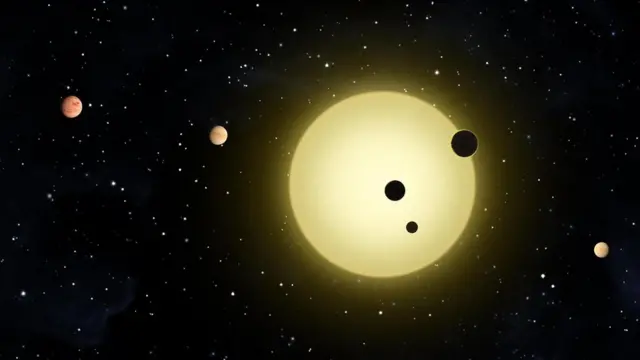
The project focused on applying artificial intelligence techniques to the search for exoplanets — planets that orbit stars beyond our Solar System. The experience allowed Gabriela to work directly in one of the most promising fields of contemporary astronomy, which combines data science, machine learning, and large-scale astronomical observations.
Artificial intelligence in the search for new worlds
The discovery of exoplanets is one of the major challenges of modern astronomy. Because these objects are located at enormous distances from Earth and do not emit their own light, observing them directly is extremely difficult. As a result, scientists often rely on indirect methods to identify them.
One of the most widely used techniques is the planetary transit method. When a planet passes in front of its host star from the observer’s perspective, it blocks a small fraction of the star’s light. This variation is recorded in graphs known as light curves, which show how the star’s brightness changes over time.
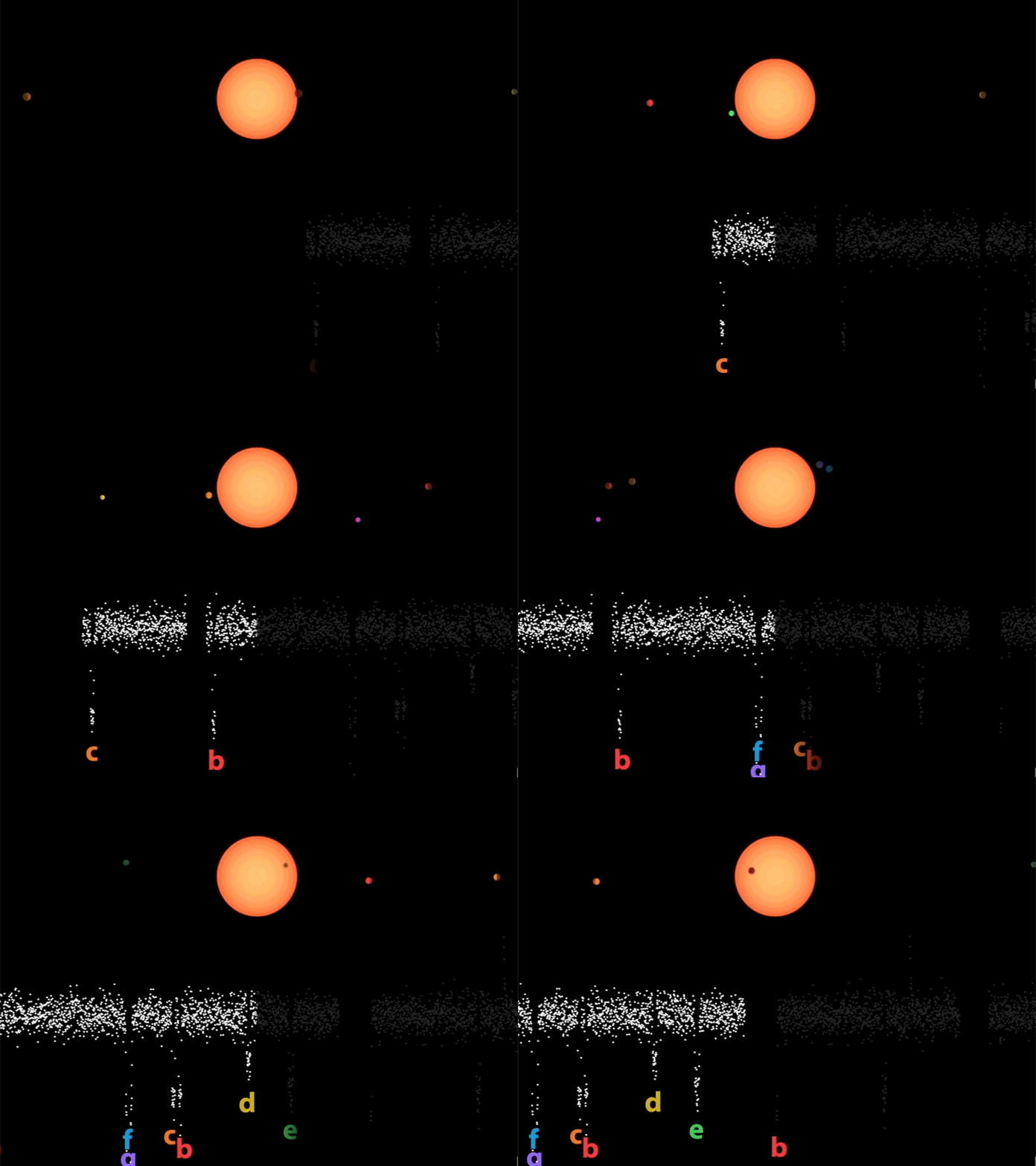
When a planet is orbiting a star, these light curves exhibit characteristic periodic dips in brightness. The challenge is that space missions such as NASA’s TESS (Transiting Exoplanet Survey Satellite) monitor thousands of stars simultaneously, generating an enormous volume of data.
Analyzing all of this information manually would be a virtually impossible task.
Training algorithms to identify exoplanets
It was within this context that Gabriela’s project was developed during her internship at Lab-IA.
The first stage of the work involved processing and preparing the data provided by NASA. Before being used by artificial intelligence algorithms, the data must undergo organization and standardization procedures to ensure the quality and reliability of the analyses.
The next step consisted of training a neural network, a computational model inspired by biological systems that is capable of learning patterns from examples.
The training process uses thousands of light curves whose classifications are already known. By comparing its predictions with the correct answers, the neural network progressively adjusts its internal parameters, improving its ability to recognize signals associated with the presence of exoplanets.
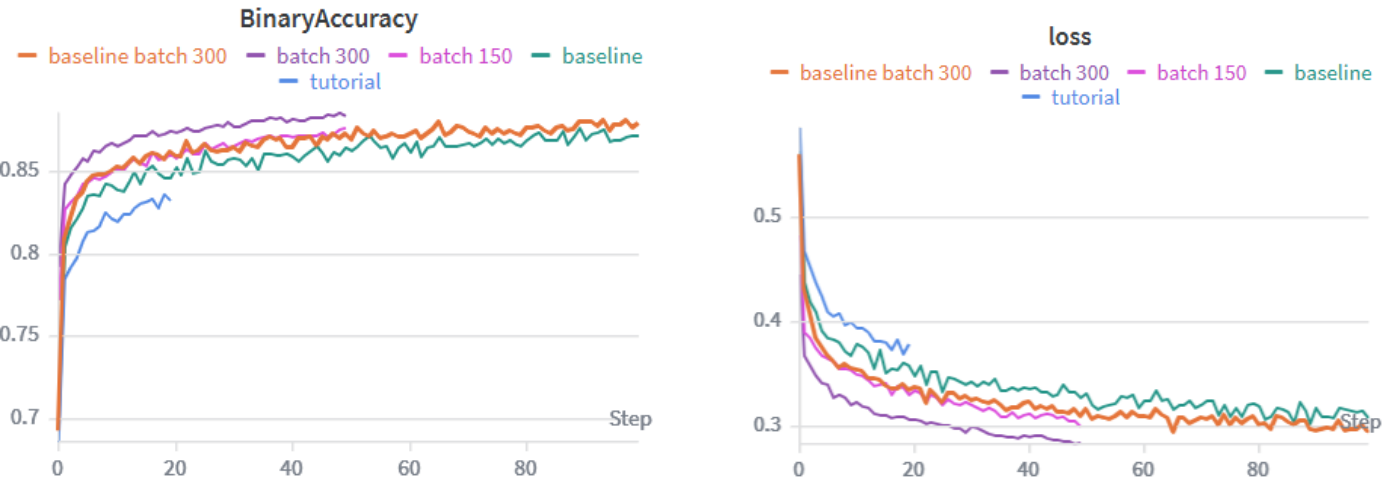
In addition, data augmentation techniques are employed during training to make the model more robust, enabling it to identify broader patterns rather than simply memorizing specific examples.
Greater efficiency for modern astronomy
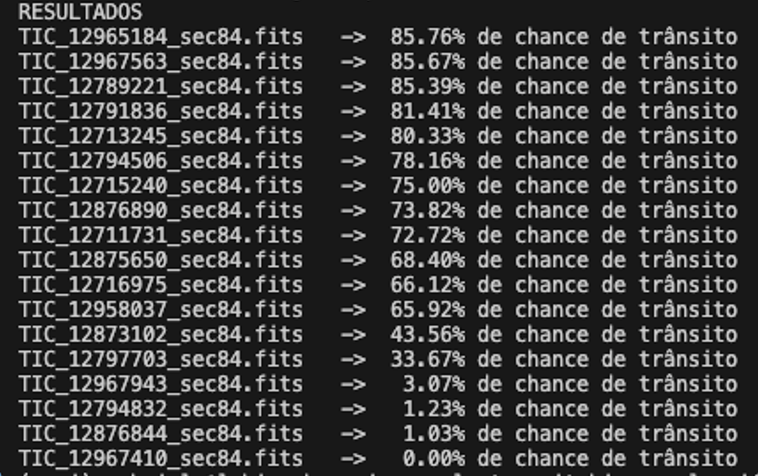
At the end of the process, the neural network is capable of analyzing thousands of light curves in just a few hours, identifying potential exoplanet signals and distinguishing them from instrumental noise or other astronomical phenomena that can produce similar signatures, such as eclipsing binary star systems.
In practice, artificial intelligence serves as a first stage of data screening, significantly reducing the volume of information that researchers need to analyze manually.
This approach accelerates the discovery of new exoplanet candidates and enhances the efficiency of scientific research projects that deal with massive volumes of observational data.
A scientific training experience
In addition to the technical development of the project, the internship provided Gabriela with an immersive experience in an interdisciplinary research environment, allowing her to work alongside researchers in fields such as artificial intelligence, astrophysics, cosmology, and scientific computing.
“It was six weeks of intense learning here at CBPF, interacting with researchers from different areas. I would like to thank Professor Clécio De Bom and M.Sc. student Mariana Bittencourt for their guidance and support throughout the project. I am also grateful to FAPESP and the Brazilian Academy of Sciences for the opportunity to participate in this exchange program through the Aristides Pacheco Leão Program,” Gabriela said.
Training the next generation of researchers
The participation of students in scientific exchange and research training programs is part of the ongoing efforts of Lab-IA and CBPF to strengthen the education of new researchers in strategic areas of contemporary science.
Projects such as Gabriela’s demonstrate how the integration of physics, astronomy, and artificial intelligence is opening new possibilities for exploring the universe and addressing scientific challenges that increasingly rely on advanced data analysis and computational techniques.